Media That Turns Experience into Assets
As the cost of producing information falls, the experience of actually building and operating something grows scarcer. MONOSPACE tests whether one experiment can extend into free records, paid tools, and the next business.
Opening condition01
Information has become abundant. Experience is still scarce.
Legacy media has reported facts, curated scattered information, and added context to events and phenomena.
Individual creators and AI now do this work too. As the cost of summarizing, restructuring, and explaining falls, more people can produce information faster. With supply up, information alone rarely makes a difference.
By contrast, the experience of building something, operating it, and meeting its users is not easily copied. Which choices were made and how they turned out stays only with the person who made them. It is raw material media has not yet fully worked.
Pressure02
Advertising and subscriptions both depend on reach.
Advertising demands more exposure; subscriptions demand steady inflow and retention. The revenue models differ, but both must keep capturing attention.
Advertising converts views and clicks into revenue. Because revenue grows with reach, topics and framing bend to the competition for attention.
Subscriptions re-prove the relationship every billing cycle. A publication must keep giving hard-won subscribers a reason to pay, while finding new readers to offset churn. Production and retention costs grow along the way.
2026 · Publishers
68% / 64%
News leaders still named display and native advertising as major revenue priorities — the highest responses after subscriptions and membership.
2026 · Audiences
17%
Even in countries relatively used to paying for online news, paid news usage stayed almost flat year over year.
Sources · Reuters Institute, Trends and Predictions 2026 · Reuters Institute, Digital News Report 2026
The question is not whether to choose advertising or subscriptions. What matters is whether content can create value outside reach and repeat consumption.
Reference cases03
Editorial capability sells beyond content.
The Economist and Monocle each extended editorial strength into research, events, products, and spaces — in different ways.
Case 01
The Economist
The Economist Group does not confine its reporting and analysis to individual subscriptions. Through Economist Enterprise it provides research and data to companies, governments, and financial institutions, and runs education and events as separate businesses.
2026 numbers. Group operating profit rose, but revenue at the B2B business Economist Enterprise fell. EIU recorded high subscription retention. Extending editorial capability does not make every business grow together.
Case 02
Monocle
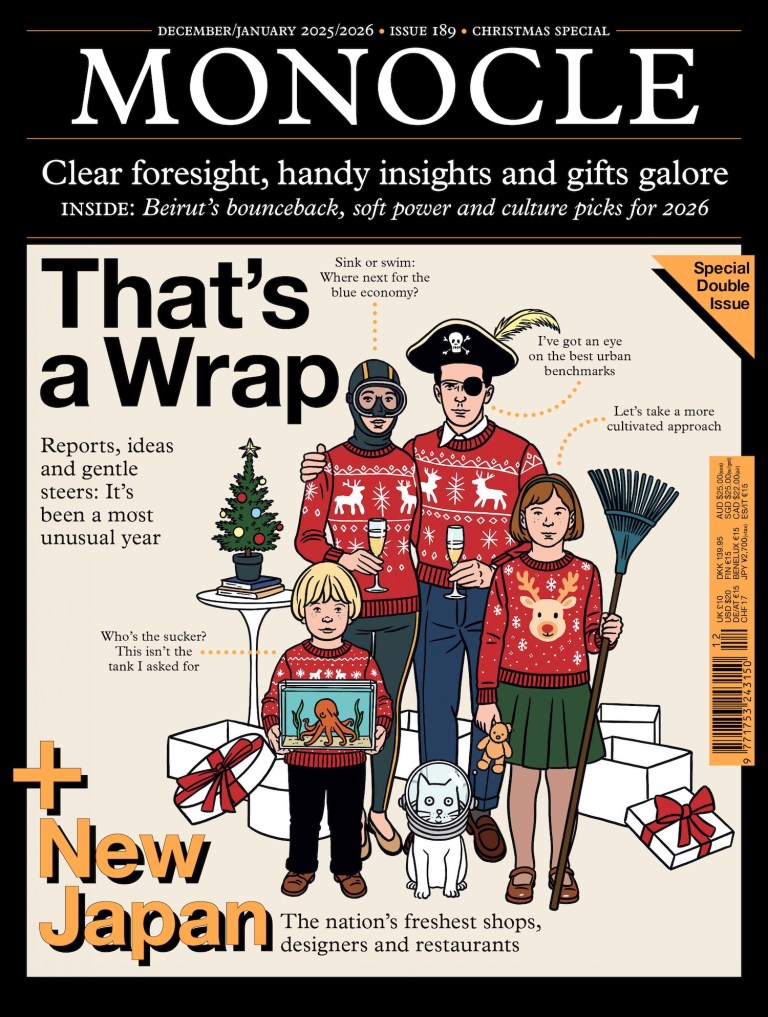
Monocle carried its magazine's editorial grammar into radio, books, conferences, shops, and cafés. Subscribers experience not just articles but events, products, and physical spaces.
Growth and limits. Revenue at Winkontent Limited, its UK operating company, grew in 2024 — and so did its net loss. More places to meet the brand does not guarantee stable profit.
Case sources · The Economist Group, 2026 Annual Report · Monocle, About Us · Monocle, 2025 Year in Review · Winkontent Limited, 2024 Accounts
Both cases turned editorial strength into new reasons to buy. But widening the business alone did not bring profitability with it.
Working hypothesis04
Information creates inflow. Experience creates difference.
Information triggers discovery, but firsthand experience is not easily copied.
MONOSPACE records what was actually built, the users met, the failures and revisions, and what remained. Production is slower; we want to see whether such records stay useful longer than generic commentary.
Publish one experiment as a free record, sell the tools that come out of it, and apply the accumulated methods to consulting and the next business. We test whether a small number of experiments can support multiple revenue streams.
Open
Free records
Publishing the problem and its conditions, the failures, revisions, and results creates discovery and trust.
Paid
Paid tools
Selling artifacts that cut application time — templates, data, code.
Applied
Consulting and the next business
Applying the skills and judgment built through repeated experiments to real problems.
Open content05
Free records carry discovery and trust.
The reader MONOSPACE looks for is defined by attitude, not job title: founder, developer, or designer — someone who builds things and follows through to the results.
A free piece must be complete on its own. At the same time it must show what MONOSPACE has actually done and give a reason to wait for the next experiment.
How we use AI and agents records the conditions and procedures that changed outcomes, along with the failures and revisions. It never stops at introducing a tool.
Building products and businesses keeps the decisions and failures made while an idea becomes a real product. It shows where judgment changed, not a finished success story.
The bar is simple: hard to get elsewhere, and actually usable. When an experiment's evidence and judgment are complete in a single piece, we watch whether readers follow through to the next one.
Business model 0106
We test the pairing of free records and paid tools first.
First we check whether free records create trust and inflow, and whether reusable tools convert into purchases.
- Free experience recordsPublish the process, failures, and results as complete content.
- Trust and inflowSee whether accumulated real experience turns into discovery and relationships.
- Paid toolsSell tools and assets organized for immediate reuse.
- The next experimentCheck whether the revenue and learning cover the cost of the next experience.
The principles and the making process stay open; ready-to-apply templates, data, code, and design systems are sold as separate products.
Free content must not become an unfinished advertisement. The free record alone should fully convey the experiment's question and judgment. Paid tools are not answers held back — they should cut the time and trial-and-error of applying the published experience.
Could fail07
Scarce experience does not automatically become something worth buying.
Scarcity alone does not make a business. If any of the following is confirmed, the hypothesis must be revised.
- Readers never discover the records.Firsthand experience creates no inflow if no one reads it.
- They read but do not buy the tools.What readers want may be the story, not tools to apply.
- Productization costs exceed the revenue.Counting production, documentation, and support, each repetition could lose money.
- Sales start steering the editorial direction.The risk is picking problems that sell over problems that matter.
Experiment roadmap08
MONOSPACE tests the hypothesis
in four stages.
Each stage must work before the next begins.
- Production systemReduce the repetitive work of recording, editing, and publishing an experiment.
- From discovery to subscriptionSee whether readers who find a piece on social convert to free subscription.
- Measuring reading and actionCheck open rates and what readers do next.
- Selling the outputsVerify what from the experiments is worth buying, and whether it actually sells.
First test09
The first test is the content production system.
First, cut the time and repetitive work it takes to record and publish one experiment end to end.
Then, in order: whether readers who discover a piece on social convert to free subscription, and whether they would buy the tools that came out of the records. If inflow never materializes or productization costs exceed the revenue potential, the hypothesis gets revised.